Progressive overload, explained in 38 seconds
Progressive overload means asking your muscles for slightly more, because once you adapt, the same weight stops challenging you and progress stalls. So add a little each week, one more rep, one more set or 2.5 kg: too little changes nothing, and too much breaks your form and risks injury.
| Title | Progressive overload: why adding a little each week works |
|---|---|
| Subject | Fitness |
| Length | 38 seconds, narrated |
| Format | Vertical, 1080 by 1920 (shown here smaller) |
The script
The narration line by line, with what is drawn for each.
- Two lifters both squat 40 kg. Twelve weeks later, one squats 70 kg.Comparison: the two lifters, at the start and twelve weeks later.
- This is progressive overload: asking muscles for slightly more.Named term: progressive overload, defined as slightly more.
- With rest, the stress of a hard set becomes slightly stronger muscle.Path of boxes: hard set, rest, stronger muscle.
- But once you adapt, the same weight stops challenging you, and progress stalls.Named term: progress stalls.
- So add a little: one more rep, one more set, or 2.5 kg.Choice cards: one more rep, one more set or 2.5 kg.
- Too little changes nothing; too much breaks your form and risks injury.Three-zone dial: from too little to too much.
- That small plate adds only about 6 percent.One big number: 6 percent.
- From 40 kg, add 2.5 every week.Bars adding up week by week, with a counter.
- Strength isn't built by one big jump, but by small steps, every week.Words set large: one big jump set against small steps.
Why this works as a short
The hook is two people
Two lifters both squat 40 kg; twelve weeks later, one squats 70 kg. The viewer wants to know what the second one did, and the rest of the script is the answer.
One idea
Add a little each week. The script names it, says why it works (with rest, a hard set becomes slightly stronger muscle) and why it stops working (you adapt, and progress stalls), then gives three small ways to add more and the limits on both sides.
Numbers said aloud
2.5 kg, about 6 percent, every week from 40 kg. Twelve weeks of 2.5 kg is 30 kg, the same gap as between the two lifters in the first line, so the ending pays off the opening with arithmetic anyone can do.
More examples
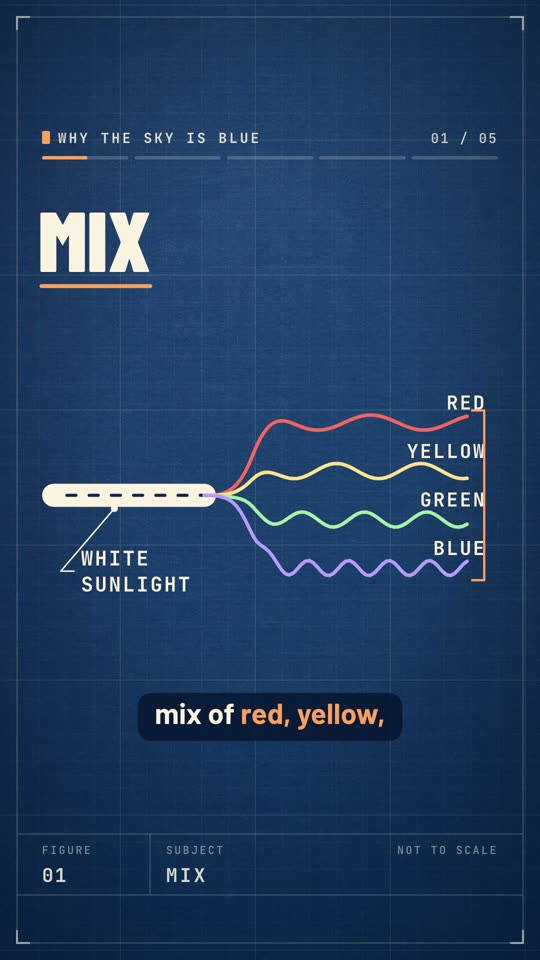 Why the sky is blueScience, 38 seconds
 How a hash map finds things instantlyComputer science, 46 seconds
To plan and script a short like this yourself, read how to make educational videos. All three examples are on the examples page.